
Welcome to the sixth episode of Indeviews! In this episode we welcome Liza Shulyayeva.
Liza works as a Build Manager at a AAA studio but she also makes her own games in her spare time. So let’s get to know her better!
❖
Which game engines/game making tools do you use for your games? Did you build your own? If you have used different engines/game making tools, which one is your favorite and why?
Liza: My engine of choice is ImpactJS. I originally chose it when I was first starting to learn JavaScript for game development and saw that it seemed to have the best documentation and a fairly active forum community.
The only game that I did not use this engine for was KROOG (source @ Github) - it was made as part of a challenge where the final zipped up package size can be no greater than 13kb and ImpactJS would blow this limit out of the water.
I like Impact because it is flexible enough to cater to different types of games. I’ve heard people say that it’s only really great for platformers, but in my opinion this is not the case. Yes, Impact is a wonderful engine for platformers - in part due to its level editor - but it’s certainly not limited to them. The majority of games I’ve used it for so far have not been platformers at all and I haven’t run into any limitations on that front.
I also like that it still requires writing actual code. There are great engines like Construct 2 out there that don’t require any programming, but I actually enjoy that side of things. In addition, you have access to the engine source and can easily modify it to suit your needs if required.
Do you use the same development process for all of your games?
Liza: I’ve found a rough process that works for me, but I’m open to experimentation and change as I learn and find better workflows.
Ideas usually come suddenly and out of nowhere so I jot them down in a notebook. Usually I don’t get started on them right away because I’m finishing another project, but I start planning them out with paper notes that are usually completely illegible to anyone else. By “planning” I mean both the core design concepts and the general code structure.
When the time comes to start the next project I take my boilerplate template (an ImpactJS installation with some generic stuff added that I use in every project) and start coding (with placeholder art).
About halfway through the project I start feeling like I can’t really tie it all together without a proper feel for how it’ll look, so that’s when I take the time to work on art assets and such and fiddling with styling/colors/etc.
This does vary a bit from project to project, though. One of my favorite things about working on my own games is that when I get bored with one task I can move onto something completely different and still have it be useful to the project. If I’m tired of coding, I can go draw some sprites or design a title screen, look for sound effects, work on documentation, etc.
What programming language do you prefer developing your games on? Why do you choose it over others?
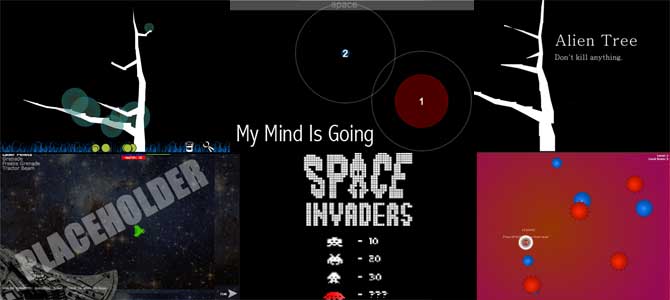
Liza: I prefer to build my personal games with JavaScript and HTML5. I chose it over the others because I already had a background in web development and it seemed like the most intuitive step when it came to moving into games. In addition, there is so much activity and new ideas, demos, browser advancements, etc with JavaScript and HTML5 that I just find it an exciting area to be in right now. However, that’s not to say that I’m not interested in other languages as well. JavaScript was a great entry language into game coding for me and I’m advancing further from there.
Do you use third party tools (map editors, sprite managers, animation suites etc) or you build your own?
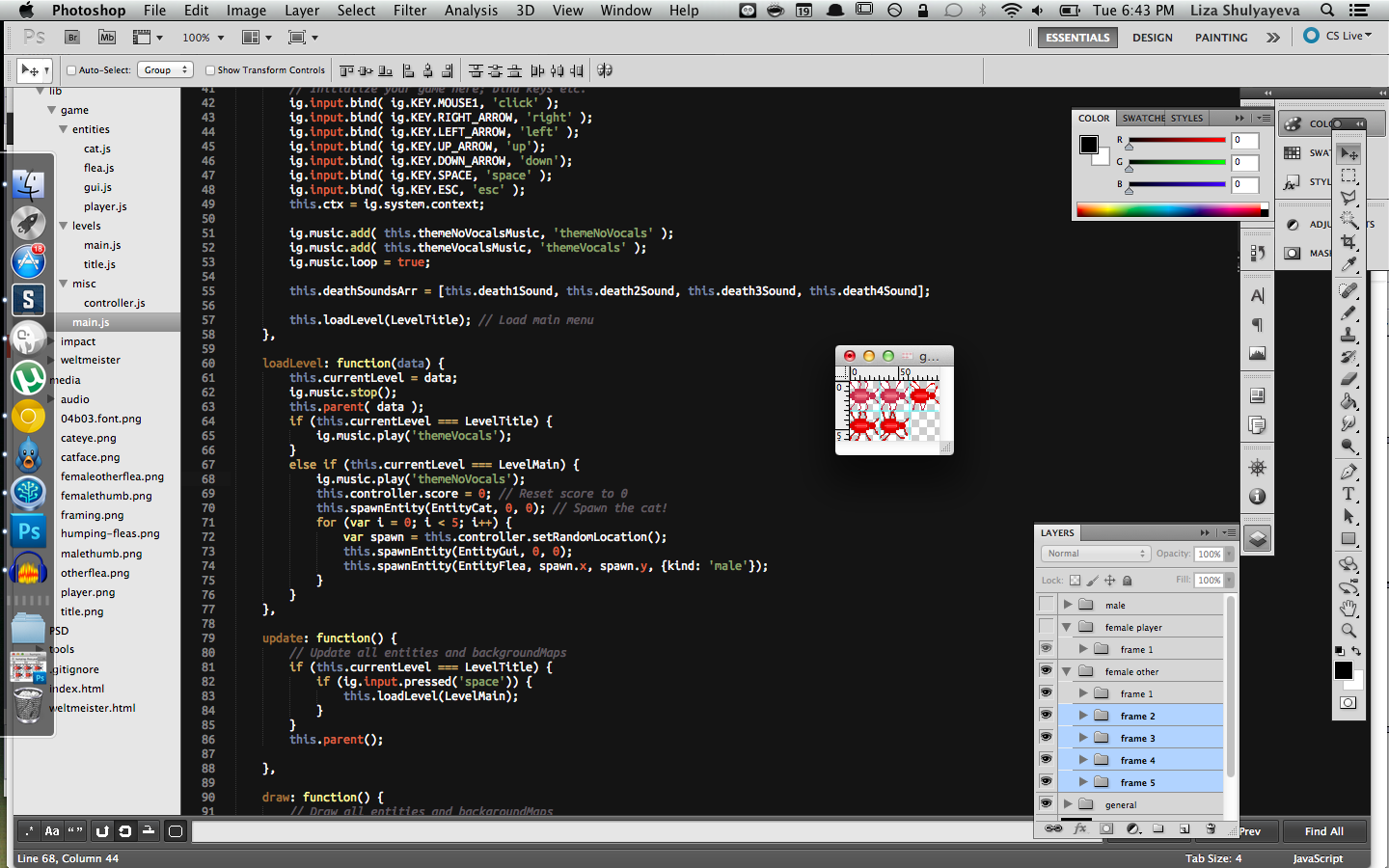
Liza: The engine I use has a level editor built in and sometimes that comes in useful depending on the kind of game I’m making, but most of the time I stick to the general tools like my code editor and graphics program.
Which tools and applications you usually use when developing a game (favorite IDE, text editor, do you use static analysis tools, revision control system, project management etc)?
Liza:
- Code editor: Sublime Text 2
- Graphics: Photoshop CS5
- Local server: MAMP
- Browser: Chrome Canary
- Source control: GitHub (with SourceTree as the client)
- Project Management: Varies greatly, but recently I’ve been using GitHub issue tracking quite a bit
- Sound: Audacity
What is your computer setup? Do you use Mac or PC? What specs? Do you have a dual monitor setup?
Liza: I enjoy being able to work in different locations (cafes, parks, planes…) and use a 2011 MacBook Air running Mountain Lion. I’d normally also do some work on my Windows PC (Core i7 3.4Ghz, GTX580 GPU, 8GB RAM), but that is currently still in a suitcase after my move, waiting to be put back together.
Do you have a screenshot of your typical development setup?
Which games inspired you the most? Do you have a favorite developer from the games industry (indie or not)?
Liza: The games that inspire me the most tend to be simple ideas made fun; the games that make me think: “Why didn’t I think of that?”
I like these kinds of games because they show me that these simple but original ideas are still out there to be discovered. You don’t have to make some convoluted game that is a mixture of five other games that get rehashed over and over, but tries not to look like any of them. Somewhere out there is an idea that is wonderful in its simplicity and perfectly basic at its core. The last game that inspired me this way was Super Hexagon.
What’s the single piece of advice that you would always give to someone, and what is something that you will absolutely avoid/never do again?
Liza: Everyone will find themselves in their own individual circumstances, but based on my own experience my advice would be to learn to code. The one thing that has brought me the most benefit when it comes to game development (both professionally and in a hobby dev environment) is practically holing myself up in my house for a year to learn a scripting language.
The single most “powerful” and self-sufficient role in game development is, in my opinion, programming. Before I started learning to code my own games I would have all these great ideas with no way to implement them - I’d either have to convince or pay a coder to help me. When I went to a Game Jam I’d have this tiny nagging thought in the back of my head about what group I could fit into, if I’d find a programmer to work with, etc. It’s very liberating to not have that worry cross your mind anymore.
One thing that I will never do again is feel helpless or have to rely on someone else to help me build the games I want to make. This will require continuous learning and improvement when it comes to programming. That’s not to say that I reject collaboration (I’ve collaborated with artists, composers, and will likely collaborate with other coders at some stage), more that I don’t need someone else to build my games for me.
What is your opinion on the rise of free game development “suites” like Unity, UDK, CryEngine etc? Do you feel interested in using them for your next projects?
Liza: I think they’re great and it’s great that there are so many options out there for people to develop with. I’d love to start familiarizing myself with Unity when I can find the time.
What are your future plans? What games are you working on right now?
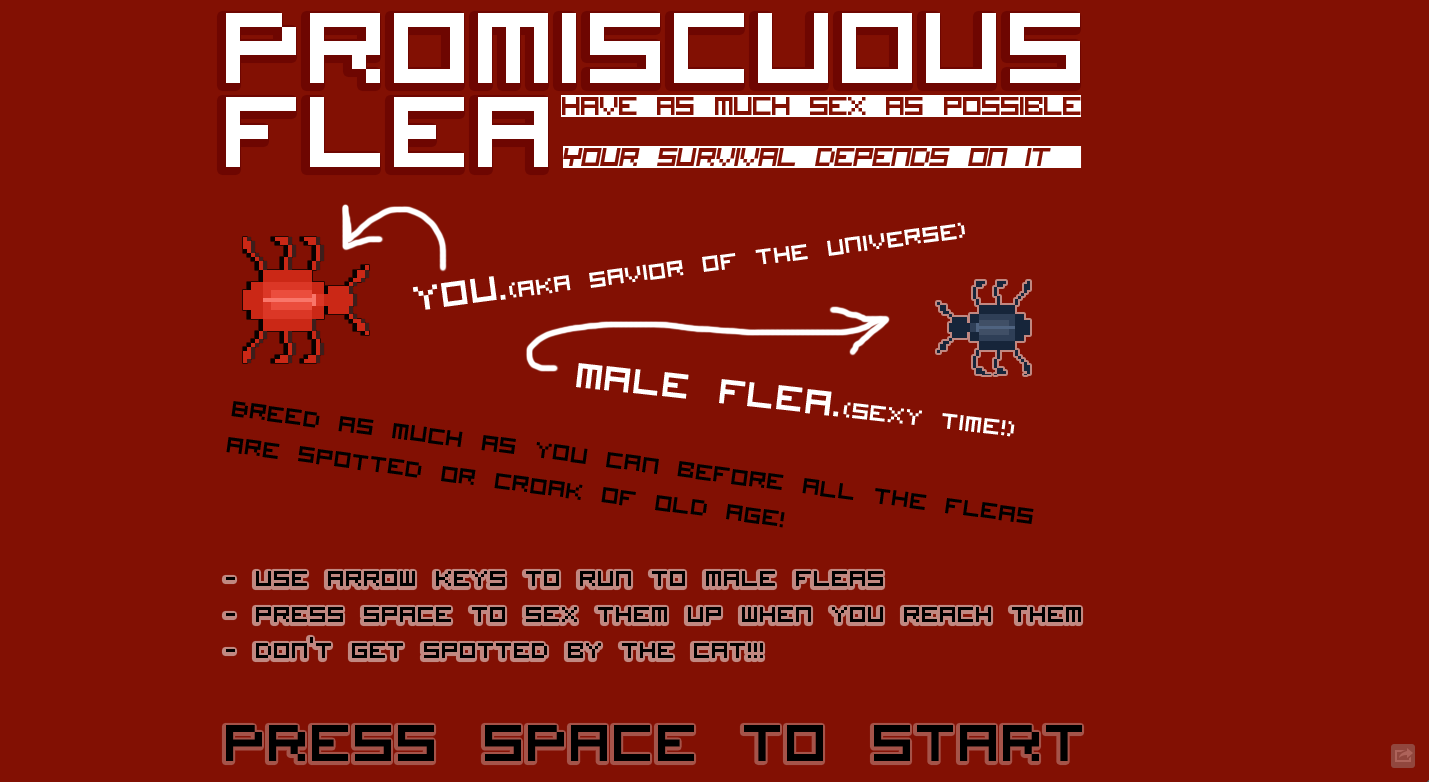
Liza: For the future I just want to keep learning, and keep coding. I want to become more comfortable with C++ and C#. Currently I’m taking part in the One Game a Month challenge, so completing one game each month in 2013 is the goal for the year. The immediate goal is to release my March game, Promiscuous Flea (in what is hopefully a playable state).
Thanks so much for this interview!
Liza: Thanks!
❖
Stay tuned for the next episode in seven days! :)
Note: If you are an indie game developer and wanna be part of the series, just send us an email at info@evilwindowdog.com